

Get your daily news on media and advertising
Provided by AGP
Roger Spitz Delivers AI & Cyber Keynotes at RSA Conference 2026 and Cloudflare’s Trust Forward Summit in San Francisco
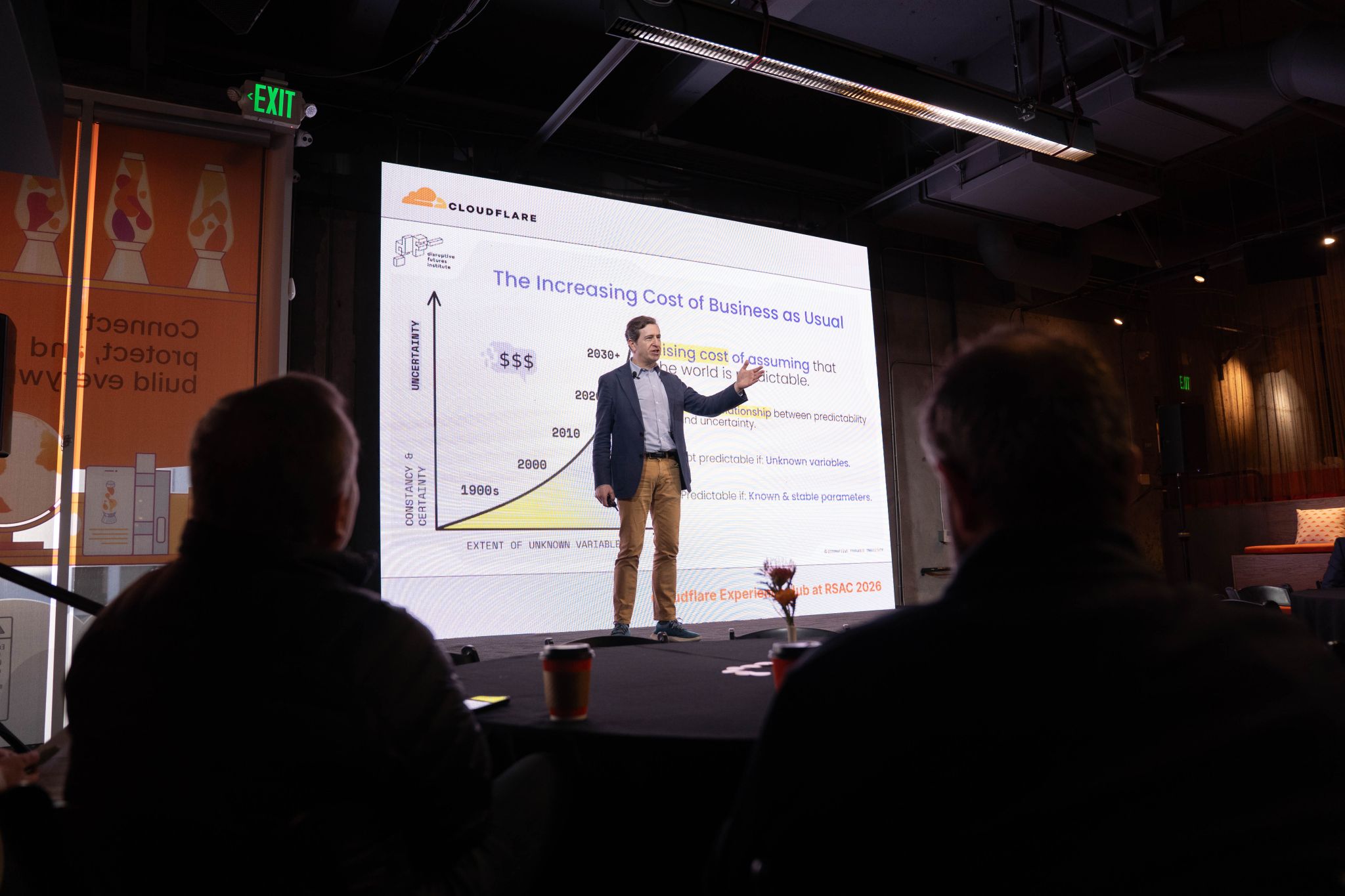
Roger Spitz Headline Keynote @ Cloudflare Trust Forward Summit (San Francisco, 2026)
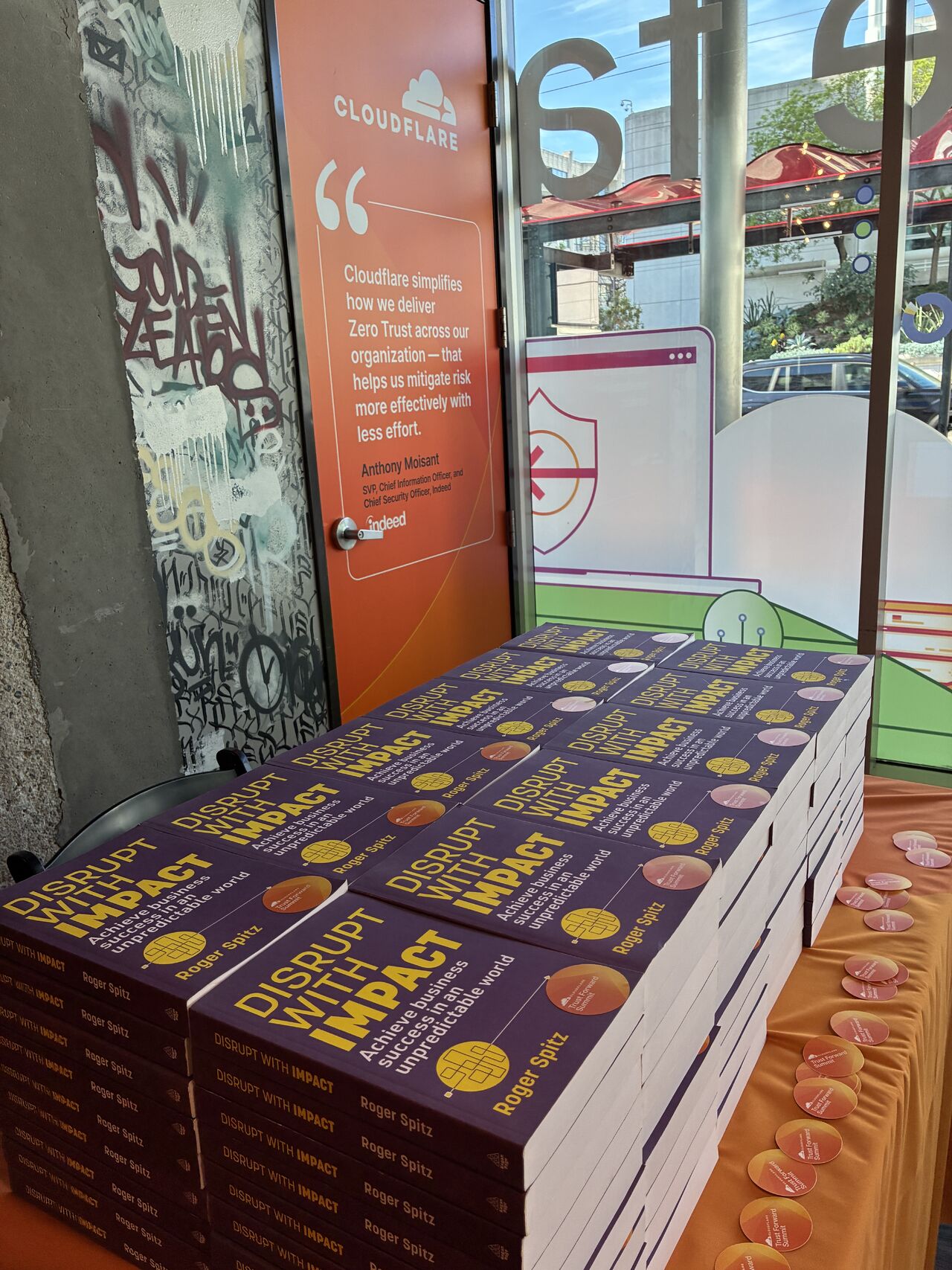
Award-Winning "Disrupt With Impact: Achieve Business Success in an Unpredictable World" - Roger Spitz Book Signing in San Francisco
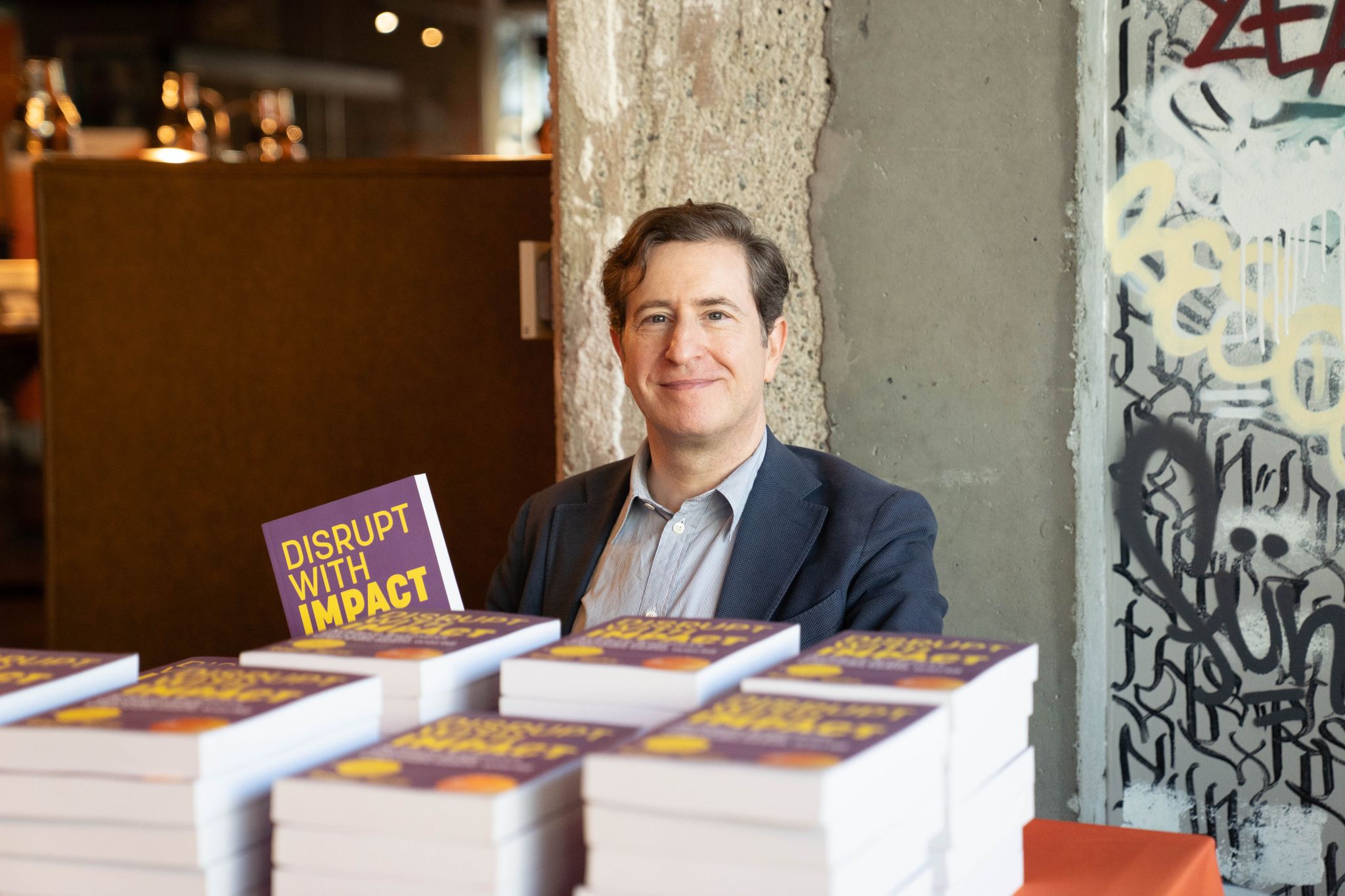
Roger Spitz Keynote & Book Signing @ Cloudflare Trust Forward Summit (RSA Conference)
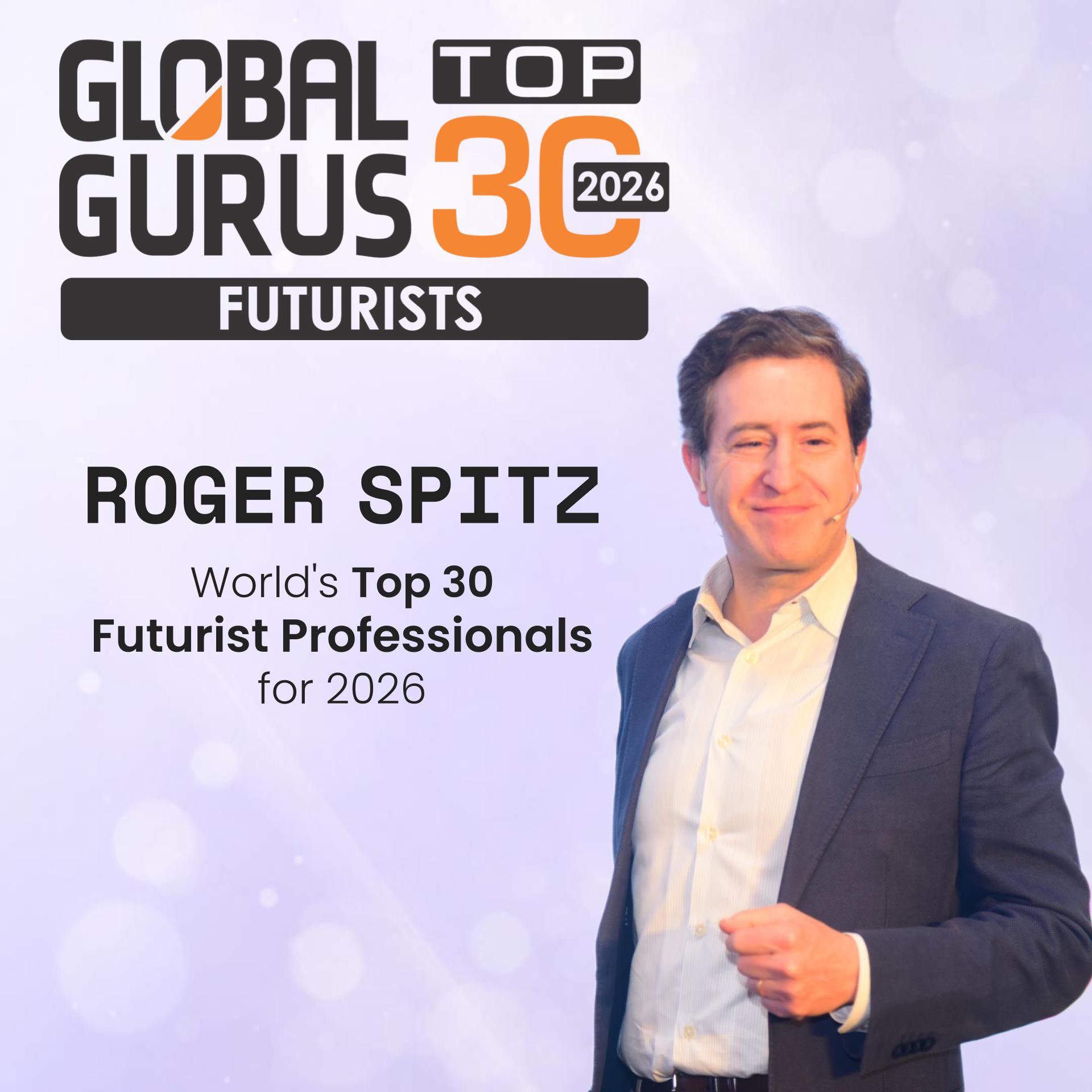
Roger Spitz - World's Top 30 Professional Futurists (Global Gurus)
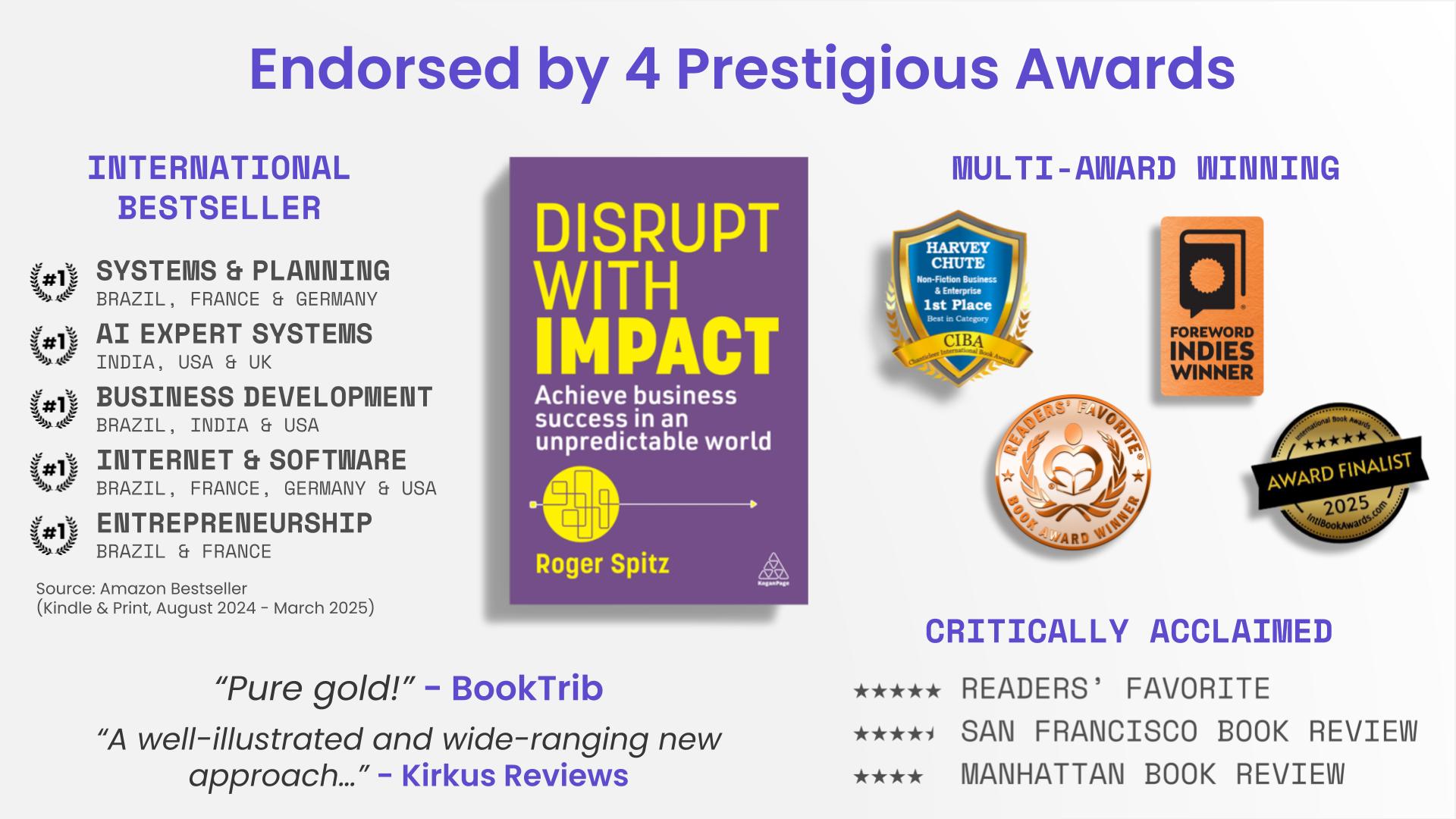
Disrupt With Impact by Roger Spitz Endorsed by 4 Prestigious Awards
Following Spitz’s Keynotes at RSA Conference 2026, Disruptive Futures Institute Warns That AI & Quantum Cyber Risk Has Begun—and Introduces New Frameworks
If your strategy depends on a correct forecast, it is already fragile. We are no longer just defending perimeters; we are defending our very agency in an era of algorithmic determinism.”
— Roger Spitz, Chair Disruptive Futures Institute
SAN FRANCISCO, CA, UNITED STATES, May 9, 2026 /EINPresswire.com/ -- The Disruptive Futures Institute today highlighted the accelerating convergence of artificial intelligence, quantum computing, and cybersecurity as defining metaruptions reshaping competitive advantage in 2026 and beyond. In a new keynote framework developed by founder Roger Spitz for executive audiences, DFI underscores that quantum is no longer a distant threat but an immediate strategic inflection: sophisticated actors are already operating on a “store now, decrypt later” basis, rendering today’s encrypted data retroactively vulnerable the moment meaningful quantum supremacy is achieved. Drawing on the Disruptive Futures Institute’s ongoing Technology Foresight Convergence work and its proprietary AAA Framework (Antifragility, Anticipation, Agility), the analysis reframes the challenge for CEOs from perimeter defense to autonomic resilience—and from isolated technology adoption to systemic leadership reckoning. Organizations that succeed will be those that redesign the human-AI “new Org Chart,” orchestrate across dissolving industry boundaries, and build the capacity to learn, unlearn, and relearn at speed—looking beyond convergence to compounded value creation rather than cascading risk.
FROM RESILIENCE TO AGENCY: THE STRUCTURAL LIMIT OF DEFENSIVE POSTURES
The 2026 summit season produced a strategic consensus that would have seemed alarmist eighteen months ago. As global cybercrime costs reach an estimated $10.5 trillion annually—a figure that would rank cybercrime as the world’s third-largest economy if measured as a nation-state (Cybersecurity Ventures, 2025)—the conversation at RSA and Cloudflare’s Trust Forward Summit shifted decisively: this is no longer just a technical defense. It is an existential crisis of decision quality under deep and accelerating uncertainty, increasingly centered on AI security, non-human identities, post-quantum readiness, and agentic governance.
Roger Spitz, Chair of the Disruptive Futures Institute—ranked the #1 Global Futurist Speaker on systemic disruption, strategic foresight, and artificial intelligence for 2026—has been codifying this shift through anticipatory leadership which he terms the AAA Framework: the organizational capacity to sense, interpret, and reconfigure in real time thanks to being Anticipatory, Antifragile, and Agile. In a UN-VICE landscape—Unknown, Volatile, Intersecting, Complex, and Exponential—traditional resilience is a waiting game that concedes initiative to the disruptor. The organizations still designing for recovery are already designing for the wrong event.
Spitz’s “Leading Beyond Certainty” keynote at Cloudflare’s Trust Forward Summit provided the strategic axis for the year. Its central argument: that Autonomic Agency does not merely complement resilience thinking—it supplants it in environments where the pace of change exceeds any model’s ability to track it. Surviving the next disruption is the wrong ambition. Becoming harder to disrupt with each one is the right architecture.
THE QUANTUM INFLECTION: STORE NOW, DECRYPT LATER
Of all the convergent forces reshaping the cyber threat landscape, quantum computing demands the most immediate executive attention—not because it is imminent, but because in the most operationally significant sense, it has already begun. Sophisticated state, non-state actors, and decentralized networks are already harvesting encrypted data at scale under a “store now, decrypt later” doctrine, anticipating the moment when quantum capability renders current cryptographic standards obsolete.
The strategic reclassification this requires is profound. Data encrypted under present standards and transmitted or stored today may be readable within a five-to-ten year window. A pharmaceutical company storing proprietary genomic IP today, a law firm archiving privileged merger negotiations, a defense contractor transmitting classified supply chain data—each is operating under the assumption that today’s encryption is today’s protection. Under “store now, decrypt later,” that assumption has already been voided. The breach has occurred; the decryption is simply pending.
The Disruptive Futures Institute’s analysis, informed by its Technology Foresight Convergence taskforces, frames post-quantum cryptography migration not as a future IT project but as a present-tense fiduciary obligation, as anticipatory governance. The National Institute of Standards and Technology finalized its first post-quantum cryptography (PQC) standards in 2024, and organizations should begin migration planning now because protecting long-lived sensitive data against harvest-now, decrypt-later attacks requires crypto-agility, inventory, and phased PQC adoption.
The quantum inflection is not approaching. For any data with long-term sensitivity, it has already arrived.
THE AAA FRAMEWORK: FROM BOARDROOM ADVISORY TO INDUSTRIAL MANDATE
At the centre of the Disruptive Futures Institute’s work is the AAA Framework—a proprietary methodology that began as a tool for elite boards navigating high-stakes transitions and has since moved into mainstream strategic planning across financial institutions, sovereign wealth funds, global technology platforms, and policy councils. Its three pillars are simultaneous organizational capacities, each reinforcing the others under stress.
• Antifragile: Architecting systems—from code and capital reserves to supply chains and board composition—that grow stronger under stress rather than merely surviving it. Antifragility is not robustness dressed in new language. It is the structural capacity to extract learning, optionality, and adaptive advantage from the very shocks that fracture less-prepared organizations.
• Anticipatory: Cultivating the institutional “What If?” muscle: the deliberate practice of identifying weak signals before they compound into Metaruptions. Anticipation is not prediction. It is the intentional refusal to be surprised by the foreseeable.
• Agility: The connective tissue between long-horizon foresight and immediate, liminal execution. Agility closes the gap between knowing what is coming and being positioned to move when it arrives. In the Metaruptive Age, emergent speed of reconfiguration is the primary unit of competitive advantage.
EPISTEMIC SECURITY: THE THIRD PILLAR OF ORGANIZATIONAL DEFENSE
Alongside quantum risk, the Disruptive Futures Institute’s 2026 frameworks elevate epistemic security to co-equal status with financial solvency and operational continuity as a pillar of corporate defence. In an environment saturated with synthetic media, adversarially generated content, and AI-driven disinformation, the protection of decision-making integrity is no longer a communications problem. It is a governance problem—and a fiduciary one.
Roger Spitz’s RSA Conference 2026 media series—focused on what he terms Weapons of Mass Disinformation (WMD)—drew a direct and deliberately provocative parallel: just as the twentieth century required institutional arms-control frameworks to govern physical weapons of mass destruction, the twenty-first requires equivalent architectures to govern epistemic sovereignty at scale. The central argument: an organization whose decision-makers cannot reliably distinguish signal from synthetic noise has already been compromised—regardless of the integrity of its technical systems.
Epistemic security requires new institutional muscles: in boards, in executive teams, and in the organizational cultures that shape how information is sourced, challenged, and acted upon. If an organization cannot trust its own data, it cannot exercise genuine agency. That is the deepest Techistential crisis of the agentic AI era—and the one least visible on most risk registers.
THE NEW ORG CHART: REDESIGNING HUMAN-AI LEADERSHIP
The human-AI relationship inside organizations is the defining leadership design challenge of the current decade. Not because the technology is remarkable—it is—but because most organizations are layering AI capability onto organizational structures, decision rights, and incentive architectures designed for a different era. The result is compounding fragility, masked by apparent efficiency.
The Disruptive Futures Institute’s 2026-2027 keynote frameworks introduce the “New Org Chart”: a deliberate redesign of how human judgment and machine capability are positioned relative to one another across the full decision stack. The question is not which decisions to automate. It is how to preserve the conditions under which human judgment remains meaningful, legible, and accountable in a world where the automation of cognition is accelerating faster than the governance of it.
This is what Spitz terms Superstupidity: the institutional surrender of judgment to prescriptive algorithms operating beyond their valid domain. It is not a failure of technology. It is a failure of organizational architecture—of designing systems that keep humans genuinely in the loop at precisely the moments when the loop matters most. Organizations that have outsourced strategic cognition to systems optimized for historical patterns are not more efficient. They are more brittle, at exactly the moments when brittleness is most consequential.
The new Org Chart is about ensuring that the humans working alongside AI are exercising genuine agency—not ratifying outputs they can no longer interrogate.
GLOBAL MOMENTUM: SAN FRANCISCO TO LONDON, SINGAPORE, BANGALORE, AND NEW YORK
The San Francisco summit season has catalysed substantial international demand for the Disruptive Futures Institute’s frameworks across sectors navigating the same underlying metaruptions. Spitz’s “Visionary Trilogy” global tour—encompassing the Mindset, Intelligence, and Leadership Shifts required for the Metaruptive Age—is now extending through London, Singapore, Bangalore, and New York, with engagements spanning sovereign wealth funds, global technology platforms, financial regulatory bodies, and national security councils.
With over 1,000 keynotes delivered across more than 40 countries, the Disruptive Futures Institute’s frameworks reach two communities that rarely share a common operating vocabulary: Silicon Valley’s technical frontier and global finance’s capital architecture. Spitz’s background as former Global Head of Technology M&A at BNP Paribas—with direct advisory experience across $25 billion in transactions—provides the practitioner’s grounding that separates DFI’s analysis from theoretical futures work.
The 2026 “Disrupt With Impact” global speaking tour also features exclusive book signings of the multi-award-winning bestseller across six continents, across organizational scales, geographies, and sectors.
For media inquiries, interview requests, and keynote engagements:
• Email: speaking@disruptivefutures.org
• Explore: https://www.disruptivefutures.org/speaking
2026 Speaker Reel: https://youtu.be/HHCLIbqDyZQ
###
MEDIA BRIEFING NOTES
ROGER SPITZ AI & CYBER QUOTES
• “The importance of epistemic security and cybersecurity is now comparable to that of national security.”
• “If your strategy depends on a correct forecast, it is already fragile.”
• “The breach has occurred; the decryption is simply pending.”
• “Anticipation is not prediction. It is the intentional refusal to be surprised by the foreseeable.”
• “The real risk isn't just a breach. It is Superstupidity.”
• “The automation of cognition is accelerating faster than the governance of it.”
• “As algorithms become the most important decision-makers in our lives, the question is not only whether we can trust AI, but whether we can trust that we understand AI well enough.”
ABOUT ROGER SPITZ
Roger Spitz is the Chair of the Disruptive Futures Institute and the architect of Techistentialism—the founding philosophy for leading in the era of AI. Ranked #1 Global Futurist Speaker on systemic disruption and artificial intelligence for 2026, and named a Top 50 Global AI Leader by Thinkers360, Spitz brings a practitioner’s discipline to futures intelligence: his insights are shaped at the intersection of high-stakes capital allocation and frontier technological change.
• Global Recognition: Ranked #15 Global Futurist Professional by Global Gurus
• Among the Top Thought Leaders in Artificial Intelligence, AI Ethics & AI Governance (Thinkers360)
• Author of five bestselling books, including Disrupt With Impact (Award Winner: CIBA Harvey Chute, Foreword Indies, Readers’ Favorite)
• Founder of Disruptive Futures Institute (San Francisco), recognized for Top 10 Education and 50 AI & Global Innovation (Thinkers360).
• Global #1 Amazon Bestseller: Disrupt With Impact topped 6 Categories including AI across the USA, UK, Brazil, India, France, and Germany
• Global Reach: Over 1,000 keynotes delivered across 40+ countries across six continents.
ABOUT THE DISRUPTIVE FUTURES INSTITUTE
The Disruptive Futures Institute (DFI) is a global authority on systemic disruption, anticipatory leadership, and strategic foresight. Founded by Roger Spitz, the Disruptive Futures Institute works with boards, executive teams, financial institutions, and policy councils across six continents, providing the frameworks and decision architectures required to lead with agency in the Age of Metaruptions. Its AAA Framework—Antifragile, Anticipatory, Agility—is in active deployment across industries navigating accelerating technological convergence. DFI’s research agenda encompasses AI governance, quantum risk, epistemic security, and the redesign of human-AI leadership architecture.
► The Disruptive Futures Institute’s Substack platform is live now at: https://thrivingondisruption.substack.com
ROGER SPITZ’S 2026–2027 KEYNOTE PLATFORMS
• Signature Flagship Keynotes: The Visionary Trilogy (Mindset, Intelligence, and Leadership Shifts). Designed for global summits and grand stages requiring a full-spectrum framing of the Age of Metaruptions.
• Frontier Keynote Series: The Futures of AI, Quantum, Synthetic Biology, and the Space Economy. Targeted at innovation and technology summits requiring deep domain intelligence within a systemic frame.
• Strategic Imperative: The Uncertainty Special Edition (Finance, Risk, and Geofinance). Calibrated for boards and financial capitals navigating compounding macro uncertainty.
• Global Disorder: The Instability Special Edition (Geopolitics and Grand Strategy). Designed for policymakers and global boards operating at the intersection of systemic risk and consequential decision-making.
• Intelligence Shift - The AI Edition: The definitive executive keynote series on artificial intelligence and the future of human decision-making. Spitz maps the full terrain of the Intelligence Shift—from the practical limits of AI prediction in nonlinear, uncertain systems to the governance of agentic AI; from the Techistential reckoning of Superintelligence versus Superstupidity to the redesign of professions, work, and education in a world of ambient intelligence. Keynotes in this series are calibrated for AI summits, technology leadership forums, corporate strategy events, and boards confronting the human-AI interface as a governance question. Topics span: the Intelligence Shift and upgrading human decision-making; AI governance, ethics, and agentic systems; Epistemic Security and Info-Ruption; the Three Gs of AI (Geopolitics, Geoeconomics, Geotechnology); Techistentialism in practice; and the futures of work, truth, and social organization in an era of pervasive machine intelligence.
• Beyond Convergence - Metaruptions and Value Creation at the Frontier: Designed for innovation leaders, venture capital audiences, and boards navigating the dissolution of industry boundaries. This series deploys DFI’s Metaruptions Center for Emerging Fields to map the breakthroughs, business models, and compounding opportunities that form where sectors, technologies, and disciplines collide. Where most frameworks treat convergence as risk to manage, this series treats it as the primary architecture of value creation in the decade ahead. Topics include: the mechanics of Metaruptions and how self-reinforcing systemic disruptions generate new market geographies; the emergence of fields, and business models as a system (BMaaS).
THE DISRUPTIVE FUTURES INSTITUTE: SIX INTEGRATED PILLARS
The award-winning Disruptive Futures Institute is structured as an operating system for unpredictability—designed to build the capacity to navigate change with agency. Its architecture integrates two core capabilities and four dedicated research centers, each addressing a distinct perspective of evolving Metaruptions.
Core Capabilities
• Disruptive Futures Academy - Futures Intelligence and Anticipatory Capabilities: The frameworks and skills for futures fluency at organizational scale. DFI develops the cognitive and operational capabilities required to move beyond static planning into dynamic, anticipatory practice—through executive education, masterclasses, research, and proprietary methodology.
• Techistential Foresight Advisory - Strategic Foresight Practice: High-level advisory for leadership teams, boards, and investors applying the Disruptive Futures Institute’s proprietary methodologies to build systemic resilience, adaptive strategies, and anticipatory governance through Techistential shifts.
Dedicated Research Centers
• Techistential Center for Human & Artificial Intelligence - The future of agency and decision-making: Research on AI’s impacts on governance, ethics, and human cognition—mapping where AI is effective and where it is not, and building the institutional frameworks required to keep human judgment meaningfully in the loop.
• DFI Metaruptions Center for Emerging Fields - Value creation beyond convergence: Strategic intelligence on the dissolution of industry boundaries and the emergence of new fields, business models, and breakthrough opportunities—where most organizations see only disruption risk, DFI maps compounding value creation.
• DFI Geopolitics Center for Grand Strategy - Navigation of global disorder through the Three Gs: Geopolitics, Geoeconomics, and Geotechnology: Equipping CEOs, boards, policymakers, and investors to operationalize Anticipatory Governance and build antifragility in a fracturing world order.
• DFI Nature and Climate Center - The transition to sustainable futures: The Disruptive Futures Institute’s flagship education center for climate foresight, decarbonization strategy and the energy transition—embedding sustainability as a systemic variable.
Roger Spitz
Disruptive Futures Institute
email us here
Visit us on social media:
LinkedIn
Instagram
YouTube
X
Other
ROGER SPITZ OFFICIAL SPEAKER REEL 2026 | Global Futurist & Keynote Speaker
Legal Disclaimer:
EIN Presswire provides this news content "as is" without warranty of any kind. We do not accept any responsibility or liability for the accuracy, content, images, videos, licenses, completeness, legality, or reliability of the information contained in this article. If you have any complaints or copyright issues related to this article, kindly contact the author above.
