

AndaSeat Phantom 4 Responds to the Growing Demand for Seating That Adapts Across Work, Home, and Gaming
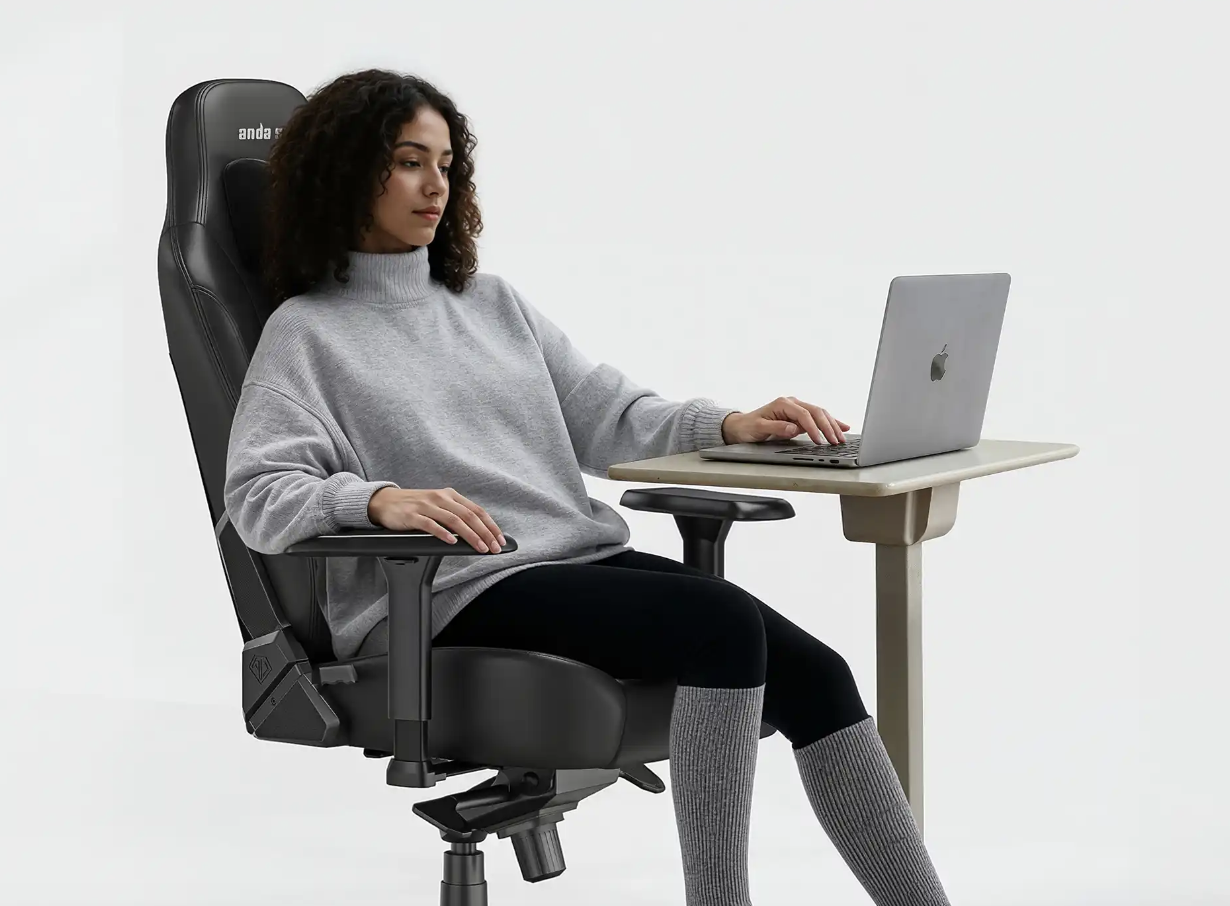
AndaSeat Phantom 4
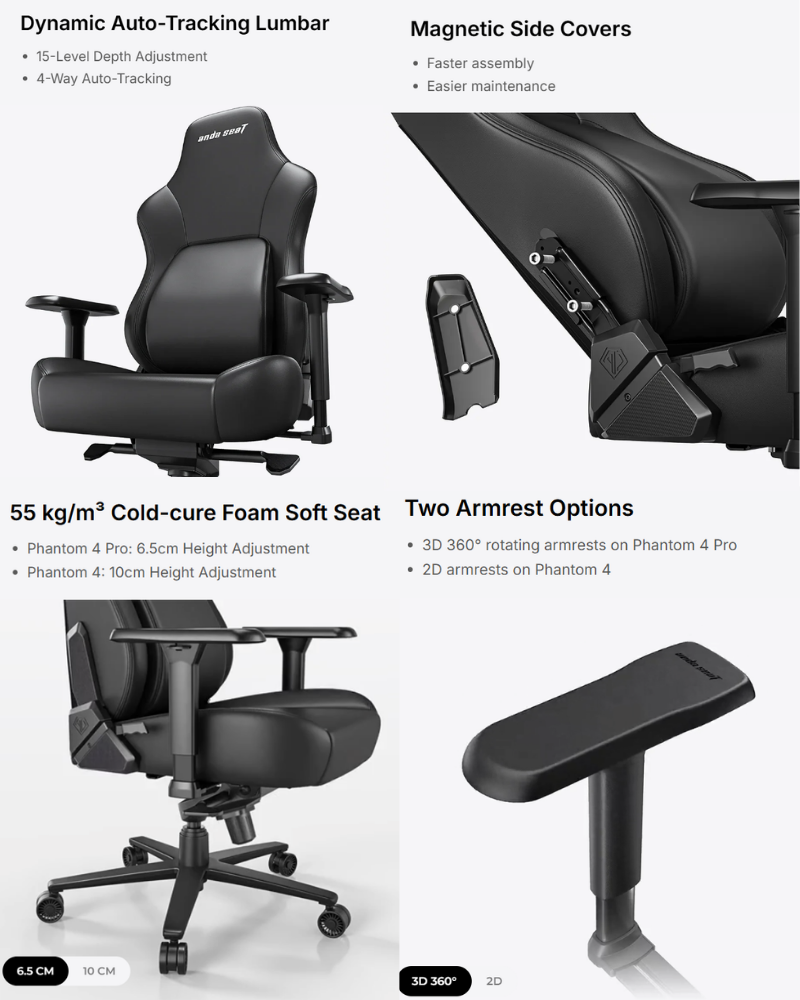
AndaSeat Phantom 4 Key Feature
AndaSeat Phantom 4 Responds to the Growing Demand for Seating That Adapts Across Work, Home, and Gaming
SPOKANE, WA, UNITED STATES, March 25, 2026 /EINPresswire.com/ -- AndaSeat released Phantom 4 series, focusing on a design challenge that has become more visible in recent years: many users no longer rely on separate environments for work, study, entertainment, and rest, and increasingly expect one chair to support all of those activities across the same day.As digital routines continue to expand, desk-based time is no longer defined by a single activity. A workstation may shift from focused computer use in the morning, to video calls in the afternoon, to entertainment or gaming in the evening. In smaller homes and mixed-use rooms, one chair is often expected to support all of those changes without requiring users to constantly readjust to a different seating logic. That shift has influenced how seating is being evaluated, moving attention away from single-scenario comfort and toward adaptability throughout the day.
AndaSeat said the Phantom 4 was developed with that transition in mind. Rather than approaching ergonomic seating as something built only for one posture, one desk routine, or one room type, the company designed Phantom 4 around the idea that modern sitting behavior often moves across multiple contexts in a single continuous routine.
A New Design Question in Everyday Seating
For many users, the question is no longer whether a chair is suitable for only office work or only gaming. The more relevant issue is whether the same chair can remain supportive as tasks change. That challenge is especially visible in home setups, where professional use and personal use increasingly overlap.
A user may begin the day sitting upright for writing or spreadsheet work, shift into a more conversational posture during meetings, recline slightly during reading or review, and later reposition again for gaming or video viewing. These changes may happen within a few hours, often in the same seat and at the same desk.
That pattern places new pressure on seating design. A chair built around one fixed mode of use may feel effective at one stage of the day but less natural in another. AndaSeat said Phantom 4 was created as a response to this gap, with a design emphasis on flexibility across changing routines rather than optimization for a single static role.
Why Multi-Use Support Has Become More Relevant
The growing overlap between work and personal environments has changed the expectations placed on furniture. In the past, task seating was often judged by how well it supported a single category of activity. Today, many users expect one product to function across different screen habits, energy levels, and posture needs.
That change is not only about convenience. It also reflects the reality that people use their chairs differently depending on time of day, task intensity, and available space. A person concentrating on keyboard work may need a different arm position from someone leaning back during a controller-based session. Likewise, visual focus, shoulder tension, and sitting depth may shift repeatedly as one activity gives way to another.
AndaSeat said Phantom 4 was designed around those transitions. The product was developed not simply as a chair for sitting longer, but as one intended to remain coherent across changing use cases without forcing the user into a single pattern of behavior.
The Phantom 4 Design Approach
According to AndaSeat, Phantom 4 was developed around the principle that adjustability should support movement between activities, not just refine one ideal position. That design approach shaped several parts of the chair beyond its lumbar system.
The Phantom 4 series includes multiple support points that allow users to recalibrate how they sit depending on what they are doing. These include armrest positioning, head and neck support structure, seat-height range, recline behavior, and the general balance between support and ease of movement.
In practical terms, that means the chair was designed for transition. Instead of assuming that users will sit in one mode for hours, Phantom 4 reflects a more fluid pattern in which the same person may need structured upright support at one point and a more relaxed seating arrangement later in the same session.
Armrest Design as a Response to Changing Tasks
One of the clearest signs of task switching appears in arm position. Keyboard work, handheld devices, controller-based play, and passive viewing all place the forearms and shoulders differently. When arm support cannot adapt easily, users often compensate by raising the shoulders, leaning unevenly, or abandoning the armrests altogether.
AndaSeat said this was one of the reasons the Phantom 4 series was developed with differentiated armrest configurations. The Phantom 4 Pro includes a 3D 360-degree rotating armrest design, while the Phantom 4 features a 2D armrest setup. The distinction reflects different levels of adjustment for users whose daily routines involve more frequent switching between input styles and seating angles.
By treating armrest movement as part of usability rather than as a secondary accessory, the Phantom 4 series frames upper-body support as an active part of the multi-scene seating experience.
Head Support and the Role of Short-Duration Recovery
Another part of modern chair use that has gained importance is the short transition between concentrated work and brief recovery. Many users do not fully leave their desks between tasks. Instead, they pause in place, lean back, reset posture, and then continue.
AndaSeat said the Phantom 4 series was designed with that reality in mind. The Phantom 4 Pro uses a magnetic memory foam head pillow, while the Phantom 4 uses an elastic-strap pillow configuration. Though the structures differ, both are intended to support moments when seated posture becomes less task-intensive and more restorative.
This aspect of the design reflects a broader change in how chairs are used. Rest is no longer always separate from desk time. In many environments, a chair now has to support both focused output and brief recovery without making either feel out of place.
Seat Height, Recline, and Freedom of Adjustment
Task variation also changes how users relate to seat height and back angle. A posture that feels appropriate for typing may not be as effective for reading, watching, or controller use. If the chair cannot adjust with reasonable ease, the result is often a mismatch between activity and posture.
AndaSeat states that the Phantom 4 series includes distinct seat-height configurations between models, along with recline behavior intended to support both active and less intensive use. This supports the company’s broader view that ergonomic seating should not be limited to one idealized desk posture.
The chair’s adjustment logic is therefore tied to routine shifts. The point is not simply that the chair can be adjusted, but that its adjustment features were included because sitting now often happens across a sequence of different tasks rather than within one narrow function.
Why This Matters in Smaller and Shared Spaces
The relevance of multi-use seating is especially clear in compact homes, shared rooms, and hybrid living arrangements. In those environments, the chair is not a secondary object. It becomes one of the central tools through which users move between work, communication, rest, and entertainment.
AndaSeat said Phantom 4 was designed with that reality in view. Its role in the product line is connected not only to ergonomic support, but also to the growing expectation that one chair should serve as a stable foundation across a fragmented daily routine.
That makes the Phantom 4 story larger than a single feature set. It reflects a design decision shaped by how rooms are being used now: less separation, more overlap, and greater demand for furniture that can move with those changes.
About AndaSeat Phantom 4
AndaSeat Phantom 4 is an ergonomic chair series developed for work, home, and gaming use. The series was designed around motion-responsive support and includes model-specific differences in armrest structure, head support, seat-height adjustment, and seating configuration. According to the company, the design approach was shaped by the increasing overlap between focused task seating and everyday multi-scene use.
About AndaSeat
Founded in 2007, AndaSeat develops ergonomic seating products for gaming, work, and home environments. The company’s product portfolio includes seating designed for a range of use scenarios, from flagship performance models to compact and mixed-use seating solutions.
Caroline Chen
AndaSeat
+ + 86 139 2232 2347
email us here
Visit us on social media:
LinkedIn
Instagram
Facebook
YouTube
TikTok
X
AndaSeat | Phantom 4 Series
Legal Disclaimer:
EIN Presswire provides this news content "as is" without warranty of any kind. We do not accept any responsibility or liability for the accuracy, content, images, videos, licenses, completeness, legality, or reliability of the information contained in this article. If you have any complaints or copyright issues related to this article, kindly contact the author above.
